
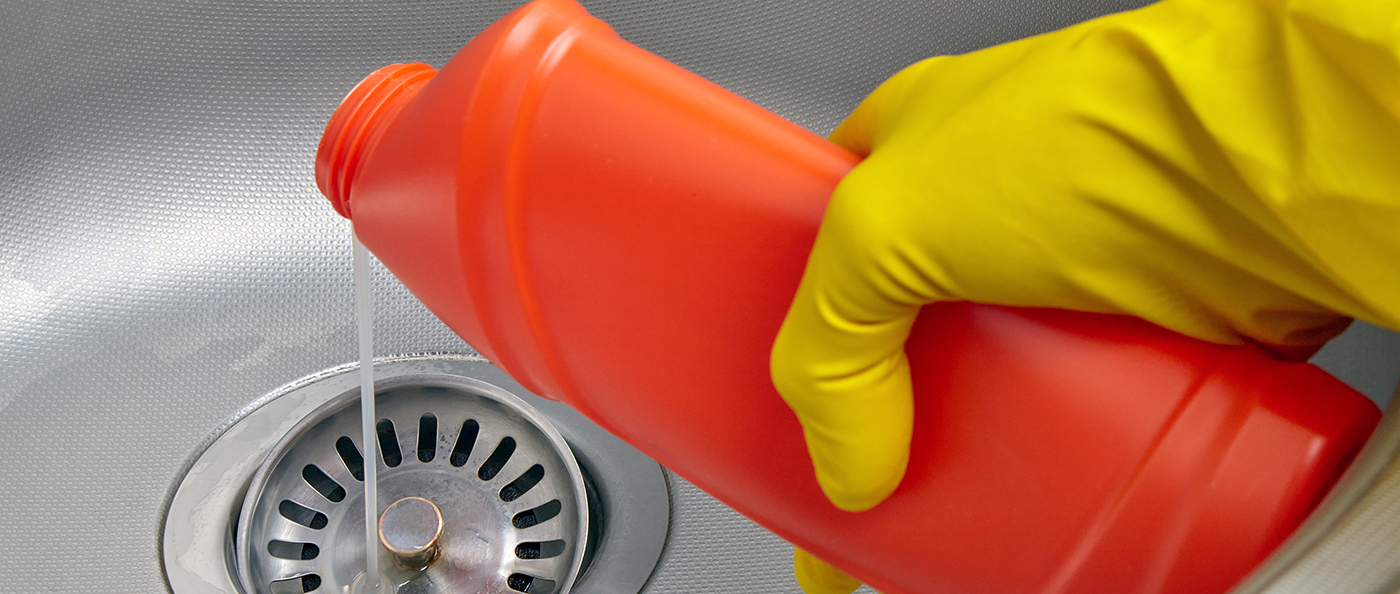
Drain Cleaners
Enter a statement here, keep it brief...
Proper Use
-
Use according to label instructions. Avoid adding a drain opener to a toilet bowl that contains toilet bowl cleaners.
-
Do not mix with bleach.
-
Do not allow to splash or touch skin or eyes.
-
Cover exposed skin and wear chemical splash goggles and heavy rubber gloves.
-
Avoid breathing vapors. Keep container lid tightly closed when not in use and store in a locked cabinet or out of reach of children.
-
Best: Use up or give away. Dispose of empty container in the garbage.
-
Second Best: Hold for a household hazardous waste collection. In Oregon, call 1-800-732-9253 to find out if there is a hazardous waste collection event scheduled in your community, or call your garbage hauler, local government solid waste department or the Oregon Department of Environmental Quality at (503) 229-5913 or toll-free at 1-800-452-4011.
Disposal
Enter text on proper disposal…
Hazardous Ingredients
- Hydrochloric acid
- Lye (sodium or potassium hydroxide)
- Sodium hypochlorite
- Sodium nitrate
- Sulfuric acid
- Trichlorobenzene
- Trichloroethane
Health Hazards
Irritant, highly corrosive
Alternatives
-
An ounce of prevention will save you pounds of trouble. Use a drain strainer to trap food particles and hair. Collect grease in cans instead of pouring it down the drain. Pour a kettle of boiling water down the drain weekly to melt fat that may be building up.
-
Remove the trap and clean out the obstruction with a plunger and/or a plumber’s snake.
For clogged kitchen drains, pour ½ cup of baking soda, followed by ½ cup of vinegar, down the drain. Cover drain and let sit 15 minutes. Rinse with 2 quarts of boiling water. The pressure created -
by the heat of the chemical reaction is often enough to open a clogged drain.
-
A good preventive measure is to give your drains a weekly baking soda and vinegar treatment. It will also keep them smelling fresh.