

Fumes In Focus
Documentary and research on the risks of gas appliances at home
The Documentary Team
Producer: Beyond Toxics
Video, Sound, Editing: Octavus Media
Beyond Toxics research team: Mason Leavitt, Alyssa Rueda, Paige Hopkins, Lisa Arkin
Thanks to study participants: John R. Webster, Kelly Ferguson, Kiara Conway, Sarah Stapleton
Support provided in part by: Donor Advised Funds of The Oregon Community Foundation; Meyer Memorial Trust, Wiancko Foundation
The Problem of Gas Stove Pollution and How We Gathered Our Imagery

What You Can Do to Reduce the Risks of Gas Stove Pollution
Government funds are available to help people switch from gas to electric
Consider induction cooking when switching from gas
For renters who may be concerned about gas stove pollution
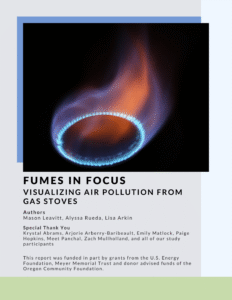
Report: Fumes in Focus
Summary
Key Findings
-
82% (14/17) of homes had chronically hazardous levels of nitrogen dioxide presenting a risk for vulnerable populations (children, elderly, people with existing respiratory conditions).
-
88% (15/17) of homes experienced increases in nitrogen dioxide associated with asthma symptoms for children. 12/17 saw increases in nitrogen dioxide associated with asthma symptoms for people of all ages.
-
Nitrogen dioxide and volatile organic compounds, a class of chemicals that are often harmful to people, produced by gas stoves spread throughout homes including dining rooms, ground floor rooms, and upper floors.
-
94% (16/17) of the ventilation hoods in this study failed to capture all pollution from gas stove burners and ovens.
-
64% (11/17) of homes had the most common ventilation exhaust system, which is a flat mesh filter often built into a microwave installed over the stove. They failed to capture any pollutants from front burners and failed to completely capture pollution from back burners.
-
No exhaust vents (0/17) captured emissions escaping from opening oven doors.
Our Recommendations
-
Protect your health by replacing gas-powered equipment in your home, or by using alternative electric appliances (airfryer, induction cooktops, electric kettle, crock pot, etc.) to help reduce daily exposures to gas stove pollutants.
-
Mitigate exposure to indoor air pollution from gas stoves by increasing ventilation while cooking.
-
Determine your eligibility for federal, state, and local tax incentives and rebates for home electrification with energy and appliance upgrades.